



In an increasingly volatile and interconnected world, decision-makers face a relentless stream of evolving challenges. Markets shift without warning, natural disasters escalate in complexity, cyber threats proliferate, and geopolitical tensions ripple unpredictably across industries. In such an environment, acting without immediate and comprehensive visibility is no longer simply a disadvantage, it is a risk to survival.
Blind decision-making often stems from outdated information, fragmented intelligence, or a reactive posture that fails to anticipate critical shifts. Leaders operating under these conditions may find themselves locked into decisions that exacerbate disruptions, erode stakeholder trust, and expose the organization to avoidable vulnerabilities. The margin for error has evaporated; delayed or misinformed actions today can trigger cascading operational, reputational, and financial consequences tomorrow.
It is within this landscape that real-time situational awareness asserts itself as a cornerstone of modern strategic leadership. It empowers organizations not merely to react to events, but to foresee them, prepare intelligently, and act decisively. Real-time intelligence enables leaders to move from reactive firefighting to proactive command, ensuring that every strategic move is anchored in reality rather than assumption. Without this foundation, even the most seasoned executives are navigating in the dark.
Understanding Real-Time Situational Awareness
Real-time situational awareness is the continuous, intelligent capture, analysis, and interpretation of critical environmental data to support immediate and informed decision-making. It extends beyond traditional data gathering by emphasizing relevance, immediacy, and actionable clarity. In essence, it transforms a stream of chaotic information into a coherent, dynamic operational picture.
Traditional information management models typically relied on periodic reporting, siloed data collection, and after-the-fact analysis. In today’s fast-moving world, such delays are fatal. The landscape demands a paradigm shift, from static, retrospective data toward live, precision-focused intelligence. This new imperative enables organizations to detect early indicators of disruption, assess potential impacts in real time, and adjust strategies fluidly as situations unfold.
The distinction is profound. Where traditional systems leave gaps that crises exploit, real-time situational awareness closes those gaps with seamless, actionable insights. It is no longer sufficient to possess information; success hinges on how quickly that information can be translated into strategic movement. In a world defined by uncertainty, awareness is no longer a passive attribute, it is the catalyst of sustainable leadership.
The Strategic Importance of Timely Intelligence in a Dynamic Risk Environment
The modern risk environment is a shifting mosaic of natural disasters, technological threats, social unrest, and geopolitical volatility. What once took weeks or months to develop can now escalate within hours. In this landscape, the speed and reliability of intelligence gathering define an organization’s ability to survive, adapt, and thrive.
This is where threat intelligence solutions prove indispensable. They provide decision-makers with real-time, contextualized insights into emerging risks across multiple domains. Whether facing a brewing cyberattack, an unexpected civil disturbance, or a cascading supply chain disruption, timely threat intelligence ensures that leaders are not caught off guard. It arms them with the clarity needed to prioritize risks, allocate resources strategically, and safeguard critical operations before disruption takes root.
A fast, strategic response is often the difference between resilience and collapse. Organizations equipped with real-time situational awareness can pivot with confidence, not hesitation. They understand the risk landscape as it is, not as it was. In doing so, they seize opportunities, reinforce stability, and outperform less-prepared competitors who are left scrambling in reactionary mode.
How Critical Decision Support Enhances Outcomes
Access to information alone does not guarantee effective decision-making. Raw data, without context or prioritization, can overwhelm rather than empower. This is why critical decision support systems are crucial. They transform vast streams of situational data into clear, actionable guidance tailored to the needs of strategic leaders.
Critical decision support bridges the gap between data collection and operational execution. Expert-driven systems analyze variables, filter noise, and present concise, prioritized intelligence that directly informs strategic choices. They guide leaders not only in understanding what is happening but in determining the best course of action under pressure.
Without real-time support, decision-making risks becoming fragmented, delayed, or paralyzed by ambiguity. Leaders may act too late, based on outdated assumptions, or may pursue suboptimal strategies that fail to align with unfolding realities. Real-time situational awareness, combined with critical decision support, ensures that every action is rooted in relevance, precision, and foresight—maximizing impact while minimizing uncertainty.
How Global Risk Monitoring Powers Strategic Agility
Today’s threats do not respect borders. A disruption originating in one part of the world can rapidly cascade across global operations, supply chains, and markets. As a result, global risk monitoring has become a non-negotiable pillar of strategic agility.
Global risk monitoring offers continuous visibility across all critical geographies, sectors, and threat vectors. It empowers organizations to identify early warning signs of disruption—whether they arise from political instability, climate events, or cyber vulnerabilities—before they escalate into full-blown crises. By maintaining a global lens, businesses can anticipate secondary and tertiary impacts that might otherwise blindside less-prepared competitors.
Localized monitoring, while valuable, is insufficient in isolation. It leaves organizations vulnerable to the broader ripple effects of interconnected risks. Real-time situational awareness with a global reach allows leaders to foresee emerging hazards, deploy resources preemptively, and adjust strategic priorities before threats materialize. This agility fosters a resilient, forward-leaning organization that can withstand and even capitalize on the inevitable shocks of a complex world.
Core Components of Effective Real-Time Situational Awareness
Effective real-time situational awareness is not a singular tool; it is a dynamic system built upon interconnected components that together create an unbroken chain of strategic readiness. Each element reinforces the next, ensuring that organizations are never caught unprepared when the environment shifts.
24/7 Hazard Monitoring is the foundation. Around-the-clock surveillance of environmental, geopolitical, and cyber threats enables businesses to maintain uninterrupted visibility across critical domains. Without gaps in observation, risks can be identified at their inception.
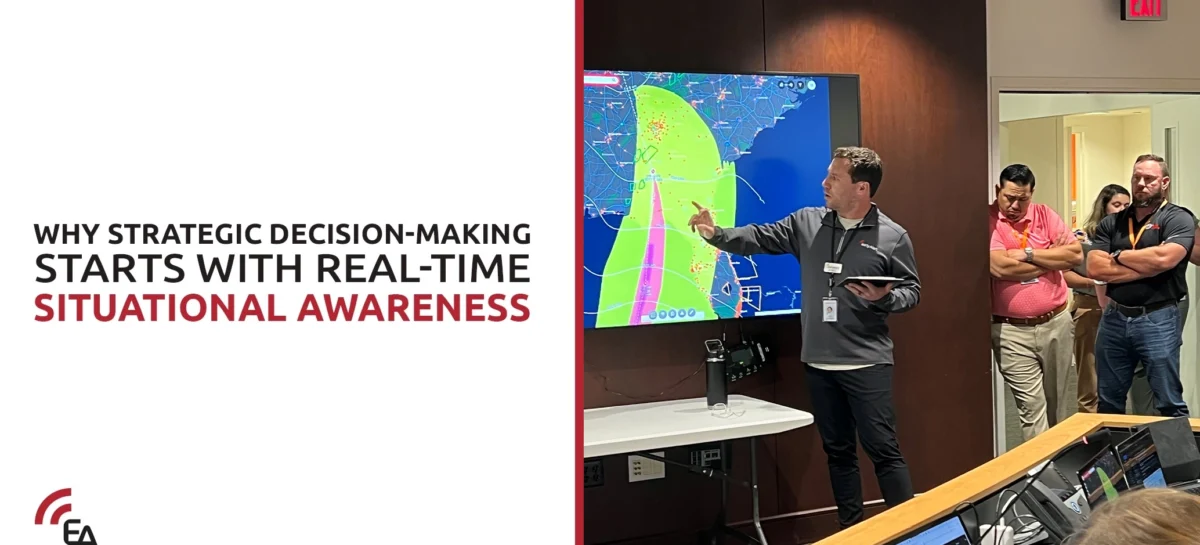
The Common Operational Picture (COP) elevates awareness from isolated data points to a unified strategic view. It integrates diverse intelligence streams into a coherent visual landscape, giving leaders a comprehensive understanding of the situation in real time.
Flash Alerts and Rapid Bulletins serve as the early warning system. Condensed, immediate, and actionable, they distill critical developments into clear advisories that empower fast, informed responses.
Finally, SME-led Intelligence Interpretation ensures that raw data becomes meaningful guidance. Subject matter experts (SMEs) contextualize intelligence, offering strategic insights that go beyond detection to recommendation.
Together, these components create an integrated, agile capability where every layer supports sharper judgment, faster action, and stronger resilience. Organizations that invest in this full-spectrum approach do not merely monitor the world, they are empowered to shape their destiny within it.
Technology as a Force Multiplier
In the modern business environment, speed and accuracy are non-negotiable. Technology serves as a decisive force multiplier, amplifying the reach, precision, and effectiveness of real-time situational awareness across the enterprise.
Platforms like EarlyAlert’s SmartSuite redefine what is possible in crisis management. By integrating real-time data aggregation, advanced analytics, and rapid communication tools, SmartSuite ensures that decision-makers are armed with the right information, at the right time, in the right format.
Automation plays a critical role in minimizing the delay between threat detection and response initiation. Through intelligent filtering and prioritization, automation strips away noise, allowing executives to focus on actionable intelligence without sifting through overwhelming volumes of data.
Artificial intelligence (AI) and geospatial technologies further enhance capability. AI-driven risk modeling, predictive analytics, and location-based threat visualization provide unprecedented clarity in high-pressure situations. These systems do not replace human judgment—they augment it, empowering leaders to anticipate evolving threats and adapt strategies at scale.
In a world where every second matters, a data-driven ecosystem powered by cutting-edge technologies transforms business resilience from a concept into a tangible competitive advantage. Those who leverage these capabilities consistently stay a step ahead, even as the landscape shifts beneath them.
Where Businesses Falter Without Real-Time Situational Awareness
Despite the critical importance of real-time situational awareness, many organizations continue to expose themselves to unnecessary risks due to common operational oversights. Recognizing these pitfalls is the first step toward avoiding them.
One major vulnerability lies in outdated systems. Relying on slow, fragmented, or obsolete technologies undermines an organization’s ability to detect and respond to threats promptly. In a rapidly evolving environment, static infrastructure is a silent liability.
Another frequent shortcoming is the poor integration of intelligence into decision-making frameworks. It is not enough to have access to threat data; leaders must have seamless channels that translate intelligence into strategic action. Without embedded processes, valuable insights often fail to influence real-time decisions.
A further blind spot is the underestimation of threat interdependencies. Risks rarely occur in isolation. Economic shifts trigger supply chain disruptions; cyber breaches spark operational shutdowns; natural disasters create cascading financial and reputational impacts. Ignoring the interconnected nature of threats leaves organizations exposed to second- and third-order effects.
The cost of these oversights is significant. Beyond immediate operational damage, businesses risk eroding stakeholder confidence, facing prolonged recoveries, and losing competitive ground to more agile, better-informed rivals. Closing these gaps is not optional, it is essential for enduring success.
Building a Culture of Strategic Foresight
True resilience begins not with technology, but with mindset. Building a culture rooted in strategic foresight is the foundation of operational excellence in today’s risk-laden world.
Leadership must champion proactive intelligence gathering as a central organizational value. It is not sufficient for intelligence to reside within isolated teams; it must be embedded into the DNA of executive decision-making, operational planning, and daily activity.
Integrating real-time situational awareness into training, simulations, and standard operating procedures (SOPs) ensures that readiness becomes second nature. Through ongoing exercises and scenario planning, teams internalize the rhythms of rapid detection, evaluation, and response. This moves awareness from a reactive posture to a proactive advantage.
Moreover, fostering a business culture that prizes early warning signals, cross-functional intelligence sharing, and swift execution prepares the organization to navigate even the most unpredictable disruptions. It is a shift from surviving crises to mastering them, where every leader, manager, and team member acts as a sentinel for enterprise resilience.
Strategic foresight is not merely about predicting the future; it is about preparing to win in it. Organizations that cultivate this capability establish themselves as leaders, not followers, in an era defined by relentless change.
Why Organizations That See First, Act First
In today’s volatile environment, strategic advantage belongs to those who are first to perceive, first to understand, and first to act. Real-time situational awareness transforms uncertainty from a threat into an opportunity, empowering organizations to navigate complexity with speed, confidence, and resilience.
Foresight and rapid action are not luxuries; they are strategic imperatives. Leaders who anchor their decisions in live, precise intelligence are better positioned to shield their operations, safeguard their people, and seize emerging opportunities long before competitors react.
Partnering with trusted providers of threat intelligence solutions, global risk monitoring, and critical decision support amplifies this advantage even further. EarlyAlert stands as a catalyst for businesses ready to evolve beyond traditional risk management, delivering integrated solutions that turn awareness into action and uncertainty into strength.
In an era where the future belongs to the prepared, the question is no longer whether to embrace real-time intelligence, but whether to do so before it is too late.


