



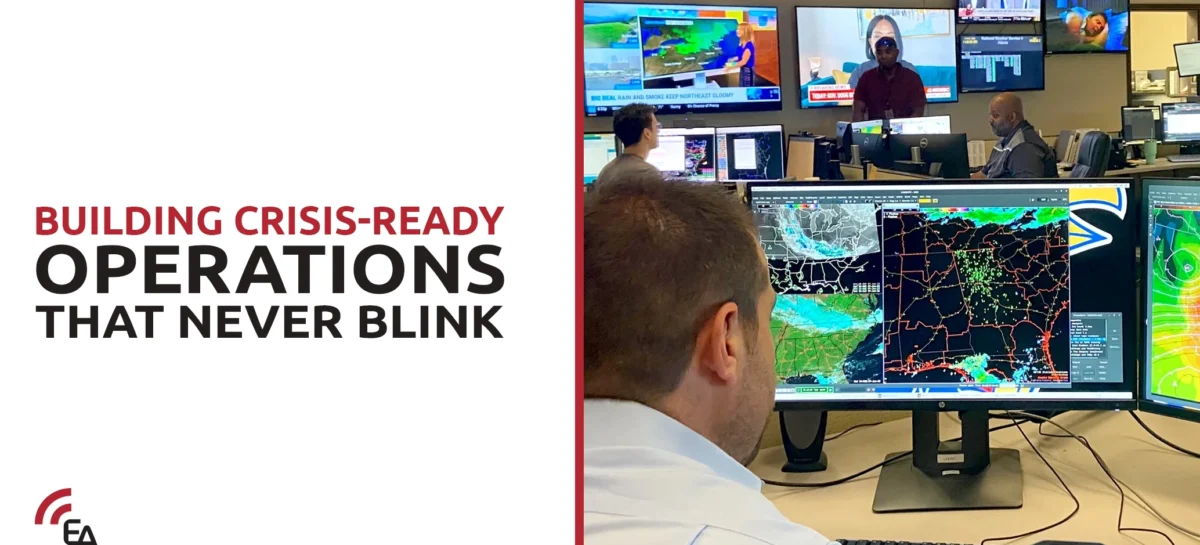
Modern enterprises are operating in environments where the line between stability and disruption is constantly shifting. Crises emerge without predictable timelines, often accelerating faster than leadership teams can align. Natural disasters, technological failures, cyberattacks, or sudden geopolitical shocks do not respect boundaries of time zones or organizational structures. They demand an immediate, disciplined response that leaves no room for hesitation.
For executives, the true challenge lies in the complexity of response. Too often, leaders are forced to manage crises with fragmented systems: one tool for communication, another for monitoring threats, and a separate process for coordinating recovery. The result is not clarity but information overload. Decision-makers face the impossible task of reconciling scattered inputs while under pressure to act decisively.
This fragmentation not only slows response but also undermines confidence at every level of governance. Boards, regulators, and stakeholders expect continuity and clarity, yet siloed operations deliver uncertainty. For enterprises committed to protecting people, assets, and reputation, this is no longer sustainable.
What is required is a unified approach. A crisis response platform designed for enterprise scale integrates intelligence, communication, and execution into a single command view. It transforms scattered activity into a structured framework, enabling leaders to act with precision even in the most complex environments. For C-suite leaders, this is not just a matter of operational improvement; it is a strategic imperative.
The Cost of Fragmentation in Crisis Response
Disjointed systems have a measurable cost. When every function relies on a separate tool, consistency is compromised. Communication becomes uneven, workflows are duplicated, and valuable time is lost reconciling information instead of making decisions. In high-stakes moments, these inefficiencies escalate into delays that can change the trajectory of the entire event.
Executives must recognize that the problem extends beyond operational inconvenience. Fragmented response undermines leadership credibility. Board members question why systems failed to align, regulators raise concerns about compliance gaps, and investors lose confidence in the enterprise’s resilience. What appears to be a breakdown of technology is often perceived externally as a breakdown of governance.
The consequences of these gaps are not temporary. Prolonged downtime compounds financial losses, weakens competitive positioning, and can damage brand reputation for years. In an interconnected economy, customers and partners quickly lose trust when continuity is not maintained.
The leadership insight is clear: fragmented systems are not simply inefficient; they represent strategic risk. Enterprises that continue to rely on scattered processes expose themselves to avoidable vulnerabilities. To meet the demands of modern crises, leaders need unified frameworks that consolidate intelligence and execution into one environment. Only then can the response move at the pace required to protect enterprise value.
What Defines a Modern Crisis Response Platform
For executives making decisions about enterprise resilience, not all platforms deliver the same level of capability. A modern crisis response platform must serve as the central environment where intelligence, coordination, and execution come together seamlessly. Its defining characteristics go beyond technology; they reflect the operational and governance priorities of today’s business leaders.
- End-to-End Lifecycle Management: A platform must cover the full cycle of crisis management, from preparation and monitoring to recovery and post-event analysis. This ensures continuity is not a single action but an ongoing capability that evolves with every event.
- All-Hazards Coverage: Risks are diverse, spanning natural disasters, technological failures, and human-caused crises. Effective platforms anticipate this variety and integrate planning across all categories of threats.
- Operationalized Intelligence: Real-time data is only valuable when it is transformed into clear, actionable insights. Platforms should filter, prioritize, and present intelligence in ways that enable swift, informed decisions.
- Embedded Expertise: Technology must be complemented by expert knowledge. Platforms that integrate SME guidance directly into workflows provide leaders with context, ensuring actions align with best practices and standards.
- Scalability and Security: Enterprise resilience requires infrastructure that can expand across geographies and functions. At the same time, compliance with standards such as SOC 2 ensures that sensitive data remains secure while operations scale globally.
This combination sets the baseline of what a single platform emergency response solution must deliver. Anything less fails to meet the expectations of enterprise leadership, which now views resilience as both a governance requirement and a competitive advantage.
The SmartSuite Advantage: One Platform, Six Integrated Applications
The limitations of fragmented tools are clear. SmartSuite resolves these challenges by unifying crisis response into a single environment designed specifically for enterprise leaders. Its six integrated applications address governance, operational clarity, and organizational readiness in one platform.
- Admin Center: Provides executives with visibility into governance, role-based access, and compliance oversight. It centralizes administrative control, ensuring leadership has accountability across the entire system.
- Situational Awareness: Offers real-time monitoring and a Common Operational Picture (COP) that allows decision-makers to see evolving threats in context. This real-time monitoring and response platform capability ensures risks are identified and understood before they escalate.
- Communicator: Delivers rapid, secure, and multi-channel communication. Two-way confirmation features provide assurance that messages are received and acted upon, reducing uncertainty during high-pressure moments.
- Resiliency Manager: Centralizes incident management, resource allocation, and Corporate Action Plans (CAPs). Leaders gain the ability to coordinate responses across departments without duplication or delay.
- Information Center: Acts as the knowledge hub, integrating reports, policies, and intelligence feeds. It ensures executives and teams have access to the information they need without searching across disconnected systems.
- Learning Center: Embeds training, credentialing, and compliance exercises directly into the platform. This ensures readiness is continuous, not a one-time event.
The integration of these applications eliminates inefficiencies caused by tool sprawl. SmartSuite transforms crisis management from scattered activity into structured, enterprise-level resilience. By combining intelligence, communication, and execution in one environment, it positions itself as a platform built not just to respond, but to unify. For leadership teams navigating volatility, SmartSuite delivers the clarity, speed, and assurance required to protect enterprise value.
Executive Imperatives Driving Platform Adoption
When boards and executive teams evaluate resilience investments, the question is no longer whether disruption will occur, but whether the enterprise will sustain performance under its weight. A crisis response platform becomes essential because it directly supports three boardroom-level imperatives that define modern leadership.
Protecting Continuity and Value
Business continuity is measured in revenue protected and reputation preserved. Enterprises with global operations face interconnected risks across supply chains, markets, and regulatory environments. When downtime stretches into hours or days, the impact is immediate and visible. A unified platform ensures that continuity plans are not theoretical but executable at scale, enabling leadership to safeguard both financial stability and stakeholder trust.
Driving Confident Decisions Under Pressure
In the midst of a crisis, executives require clarity. Fragmented systems drown leaders in information without context. A unified environment brings intelligence, communication, and resource allocation into one view. Dashboards informed by real-time data, reinforced by SME-guided insights, transform decision-making from reactive guesses into deliberate actions. This confidence under pressure is the hallmark of effective leadership.
Demonstrating Governance and Assurance
Boards, regulators, and investors expect resilience to be documented and defensible. Standards such as ISO 22301, NFPA 1660, FEMA NIMS, and DHS frameworks define what preparedness should look like, but leadership must show alignment in practice. A single platform emergency response solution creates the auditable record executives need, reinforcing governance and demonstrating foresight to every stakeholder.
From Tools to Transformation
Enterprises that view crisis management as a collection of tools risk treating resilience as an operational side task. The shift toward a strategic platform represents a fundamental change in posture. Rather than cobbling together fragmented solutions, leaders are embracing environments where monitoring, coordination, and execution occur in one unified structure.
This transformation strengthens enterprise resilience by embedding crisis management into the organization’s DNA. A real-time monitoring and response platform ensures that intelligence flows seamlessly, while SME-driven workflows ensure that leadership has the context to act. The result is not firefighting, but anticipation and precision. For executives, unification transforms resilience from a tactical function into a strategic advantage, shaping how the enterprise performs under pressure and how it is perceived in the market.
A Platform-Driven Path to Enterprise Confidence
Disruption has become a defining element of global commerce. Executives cannot rely on fragmented processes when continuity, brand reputation, and governance are at stake. The right platform is not a matter of convenience; it is a requirement for effective leadership in volatile markets.
A unified, SME-driven crisis response platform defines the difference between hesitation and confident execution. It equips boards and CEOs with the clarity, accountability, and operational strength to sustain performance across crises of any scale.
The path forward is clear: organizations that partner with EarlyAlert to embed crisis-ready operations position themselves as leaders in resilience. These enterprises will not only navigate disruption effectively but will define what it means to operate with confidence in an uncertain world.


